You might typically think of modern skyscrapers when considering China. But China’s cultural landmarks are as vast and varied as the country itself with imperial palaces that once housed emperors to classical gardens built 5 centuries ago.
China’s diverse selection of attractions draw international travelers worldwide. From the most visited landmarks in China to lesser-known gems, these sites offer a deep dive into the country’s rich history and culture.
Here’s our pick of the best cultural and natural landmarks in China.
1. Forbidden City, Beijing
Best for imperial architecture
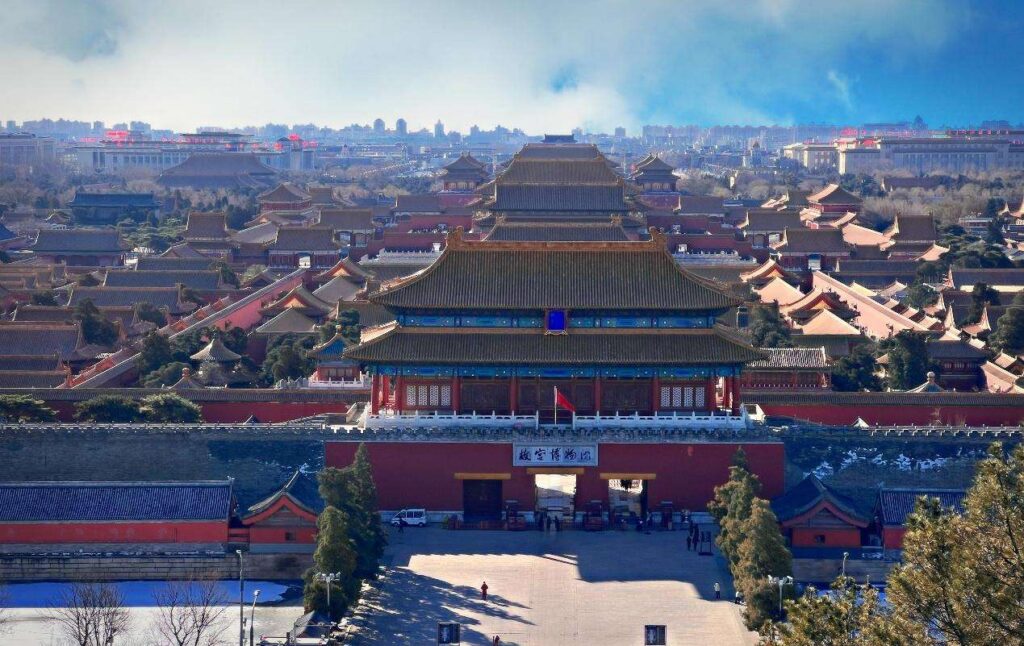
Golden roofs and ceremonial halls can be found around the Forbidden city, which is located right in the center of Beijing. As China’s largest surviving ancient palace complex, it remains a masterpiece of traditional Chinese architecture that was once reserved for emperors and their courts.
Covering 178 acres, the site can take most of the day to explore. If time allows, the Temple of Heaven is another UNESCO site about an hour away by taxi.
Planning Tip: Book tickets online up to 7 days in advance to avoid lining up at the ticket office.
2. The Great Wall of China, Beijing
Best for history enthusiasts and bucket-list hikes
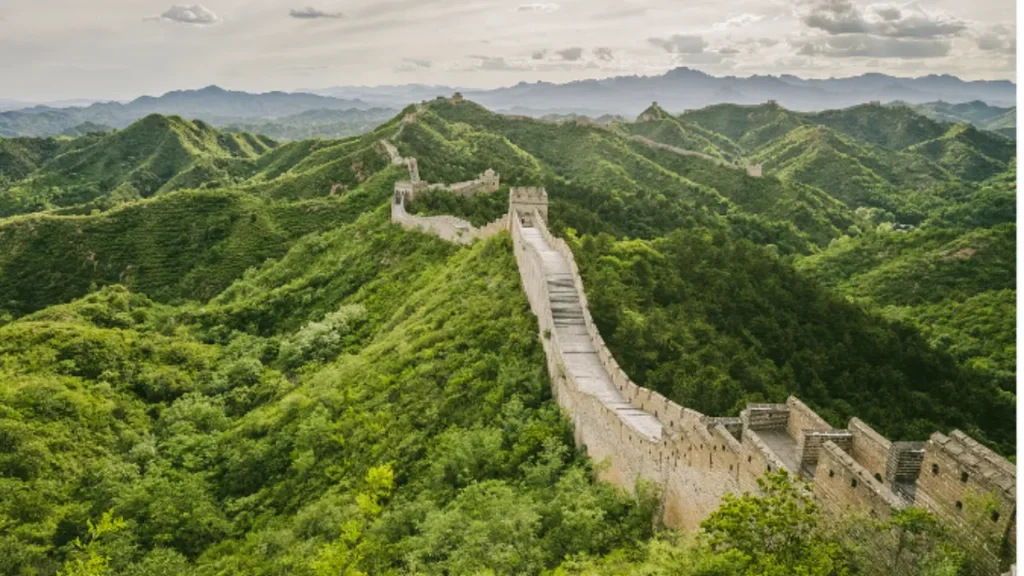
The country’s most iconic landmark is arguably the Great Wall of China. Found roughly 70 to 80km (44 to 50 miles) north of central Beijing—depending on the section you visit—this ancient defensive line is made up of many segments built across centuries. The best-preserved and most visited sections, like Badaling and Mutianyu, offer incredible views of the surrounding mountains.
No matter the month, domestic and international tourists are drawn to the area. Many visitors come to enjoy the landscape that transforms beautifully each season.
3. The Bund, Shanghai
Best for iconic city skyline and European-inspired architecture
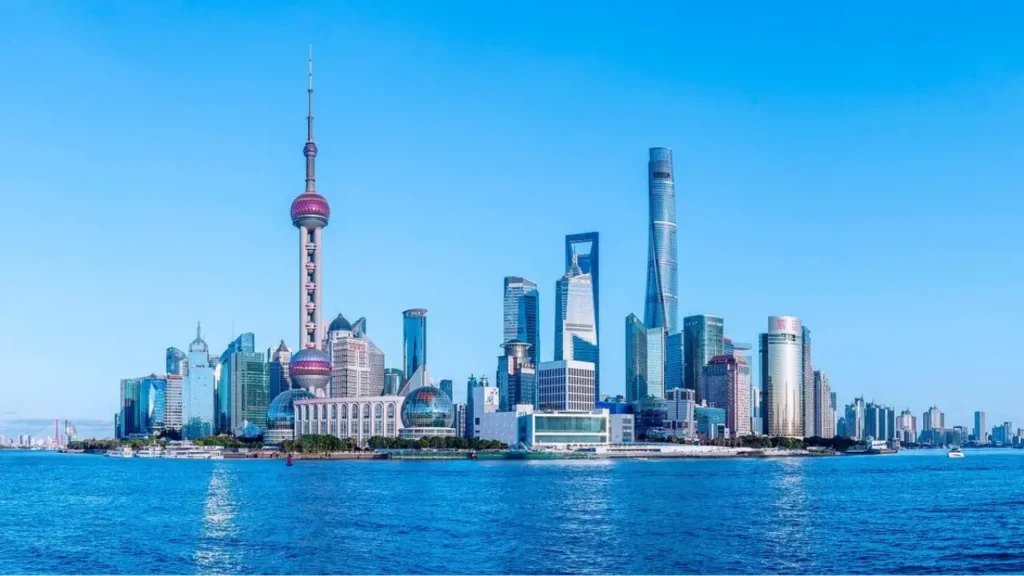
Stretching along the western bank of the Huangpu River, the Bund in Shanghai showcases a stunning collection of neoclassical, Renaissance, and Baroque-style buildings. These grand facades reflect the city’s colonial past.
The area also directly connects to Nanjing Road, one of Shanghai’s busiest shopping and dining streets. By night, you’ll enjoy spectacular views of the city’s illuminated skyline and bustling river traffic.
Planning Tip: Stroll less than 1km east to Yuyuan Garden for a taste of traditional Shanghai.
4. Humble Administrator Garden, Suzhou
Best for classical Chinese gardens
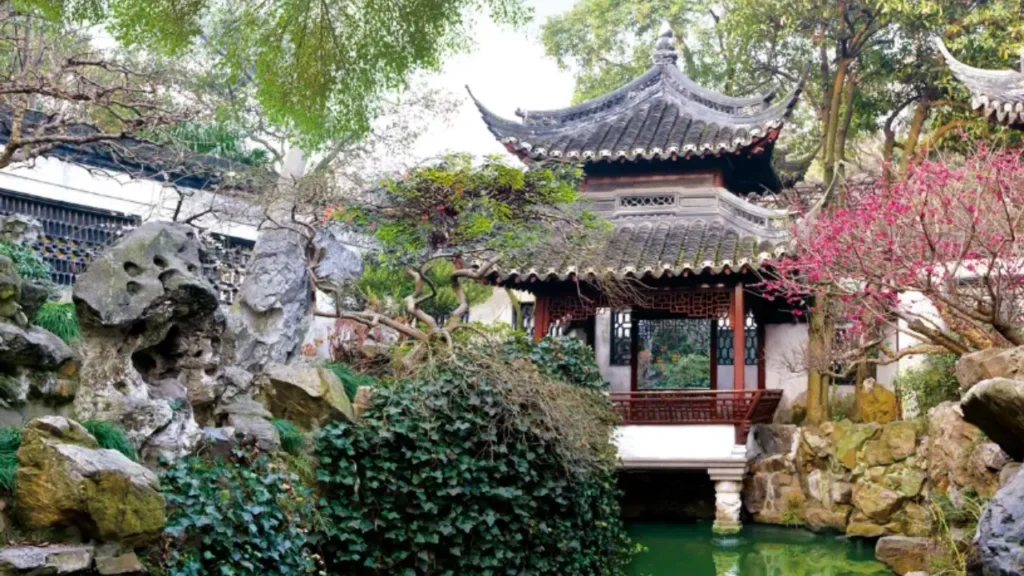
A short train ride from Shanghai, Suzhou is famous for its canals, silk, and classical gardens. Perhaps the most popular landmark of all is the Humble Administrator’s Garden. Built over 500 years ago during the Ming Dynasty, the site is famous for its arched bridges, shaded pavilions and koi ponds.
As one of China’s great classical gardens, it captures the harmony between architecture and nature.
Planning Tip: The nearby Lingering Garden is smaller but equally atmospheric, known for its rockwork. Combine the two for a full classical Chinese garden experience.
5. Terracotta Army, Xi’An
Best for archaeological wonders
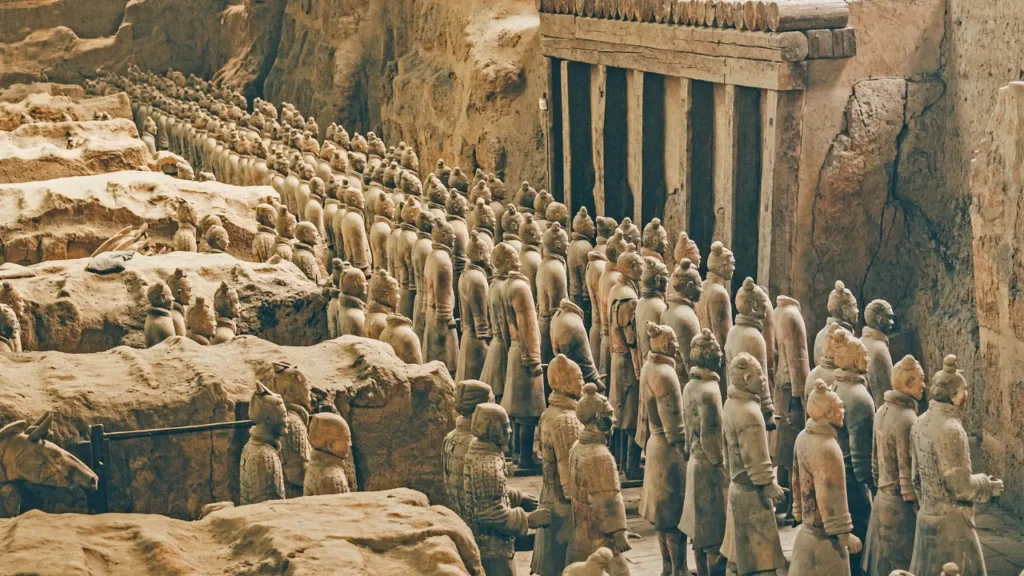
Heading West to Xi’an lies the Terracotta Army that guards the tomb of Qin Shi Huang, China’s first emperor. Thousands of life-sized warriors stand in formation, each with distinct expressions and armor.
The sheer scale and craftsmanship offer insight into ancient military power and funerary beliefs. You’ll find warriors in various states of restoration showcased in the main exhibition halls. Some are well-preserved, while others are still being reconstructed by archaeologists.
6. Shaolin Monastery, Zhengzhou
Best for discovering Chinese martial arts
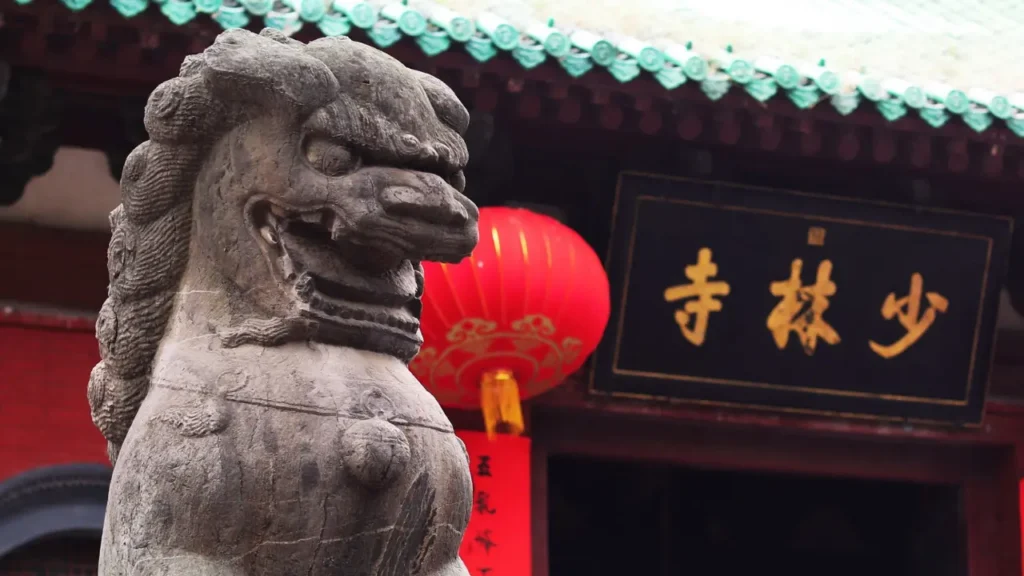
Set against the Songshan Mountains in Zhengzhou in Henan Province, Shaolin Monastery offers a quieter alternative to China’s major tourist sites. This legendary temple is often considered the birthplace of Chan (Zen) Buddhism, and it’s still home to monks who begin each day with meditation and kungfu training. Just beyond the main halls lies the Pagoda Forest, which serves as a sacred grove honoring generations of monks.
Planning tip: Regular high-speed trains connect nearby Zhengzhou and Luoyang to major cities.
7. Longmen Grottoes, Luoyang
Best for Buddhist art and cultural heritage
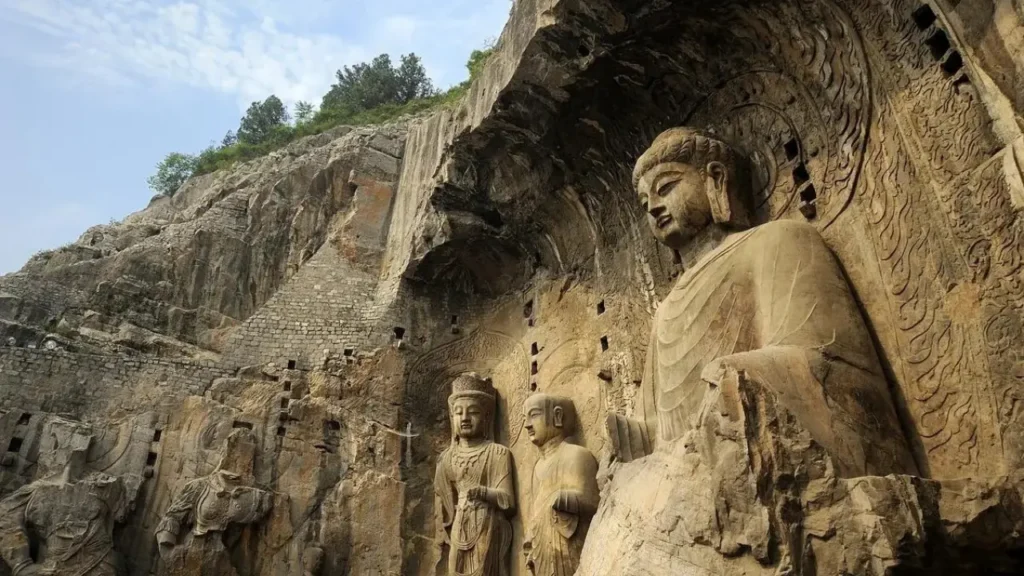
Still located in Henan Province, the Longmen Grottoes represent one of China’s finest examples of Buddhist rock art. Found in the ancient city of Luoyang, over 100,000 statues are carved into the limestone cliffs that line the banks of the Yi River.
As you follow the winding paths, intricate Buddha statues and delicate carvings reveal the incredible devotion and skill of ancient Chinese craftsmen.
8. Zhangjiajie National Forest Park, Zhangjiajie
Best for sandstone landscapes
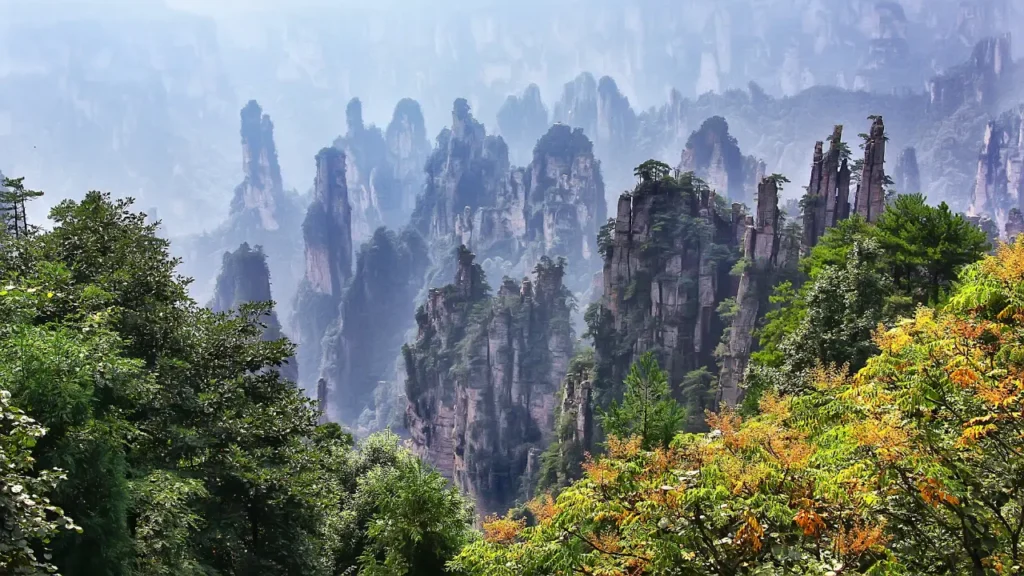
In the south-central Chinese province of Hunan, towering sandstone pillars define Zhangjiajie National Forest Park—famously inspiring the floating mountains of Avatar. Here, the varied terrain supports incredible biodiversity where wild orchids grow and macaques can often be seen perched on the edge of the trail railings.
The glass-bottomed Zhangjiajie Grand Canyon Bridge offers panoramic views for those brave enough to walk across the world’s highest and longest glass bridge.
Planning tip: Aim for spring (April–May) or autumn (September–November), when the weather is clearest and the crowds are lighter.
9. Guilin Scenic Area, Guilin
Best for iconic river landscapes
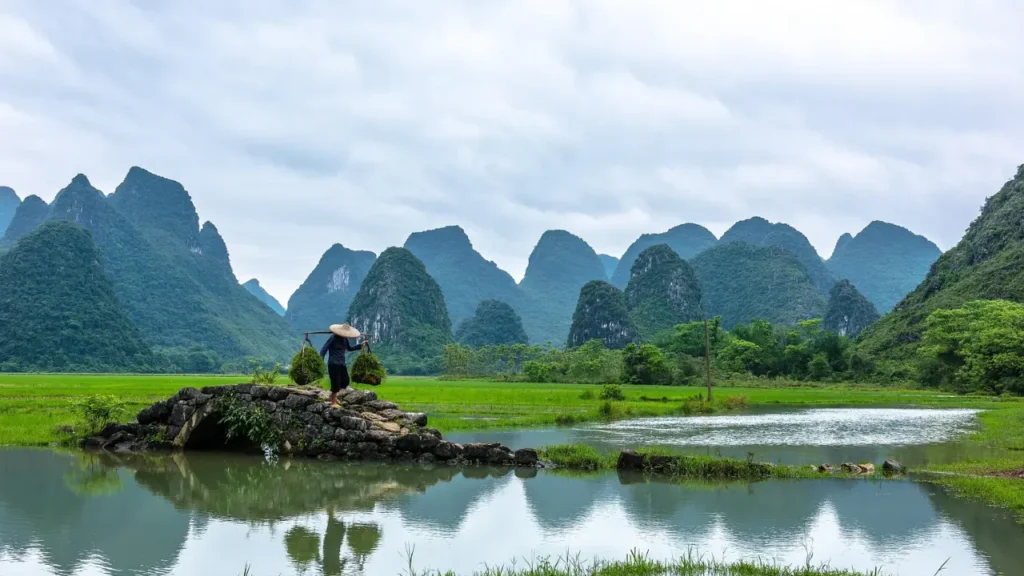
With limestone hills and winding rivers, Guilin is one of southern China’s most scenic destinations. Known for the Chinese saying “the best mountains and waters under heaven,”the highlight of the region is the Li River. A leisurely raft ride down the river offers picturesque views of the jagged peaks, quiet villages, and calm waters.
Planning tip: Just 30 minutes away by high-speed train ride is the charming Yangshuo with its peaceful vibe, countryside atmosphere, and scenic cycling paths.
10. Lijiang Old Town, Lijiang
Best for charming architecture
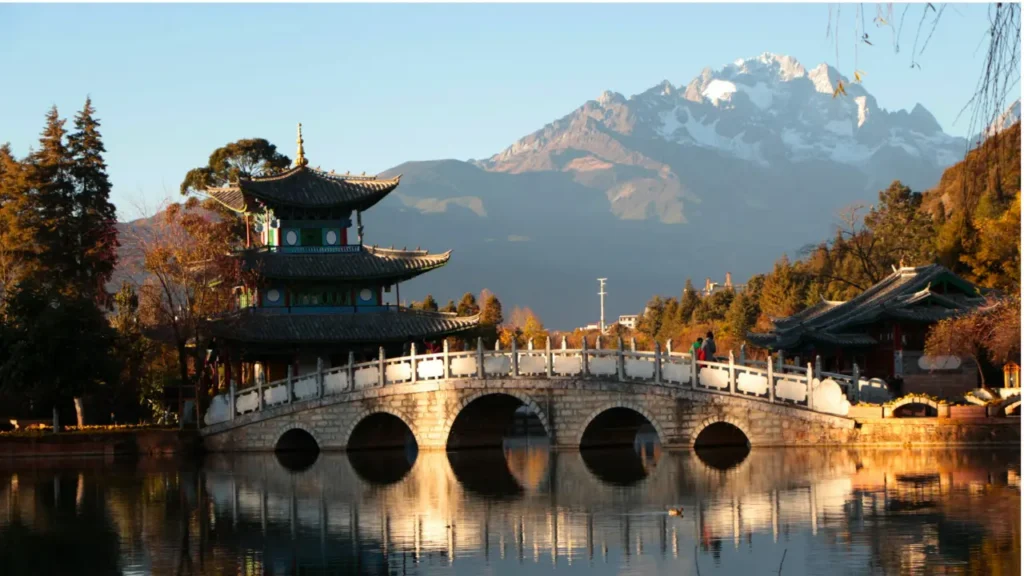
Yunnan Province is known for its cultural diversity and stunning landscapes. In the northwest of the region, Lijiang’s cobbled lanes, wooden homes, and canals paint a glimpse into Naxi culture.
Despite tourist crowds, it retains an authentic charm that shows you another perspective of ancient China. The town showcases a blend of Han Chinese and Tibetan influences that creates an architectural style unique to the country.